About Transdiagnostics
By rail operators, for rail operators.
Transend was built by two people with 60 years in rail between them. Peter Hogg and Glenn Vivian have spent their careers on signalling and communications, heavy-haul braking, driverless trains, and powering equipment a long way from the nearest supply. Those are the problems an onboard monitoring system has to solve.
The founders
Sixty years in rail between them.
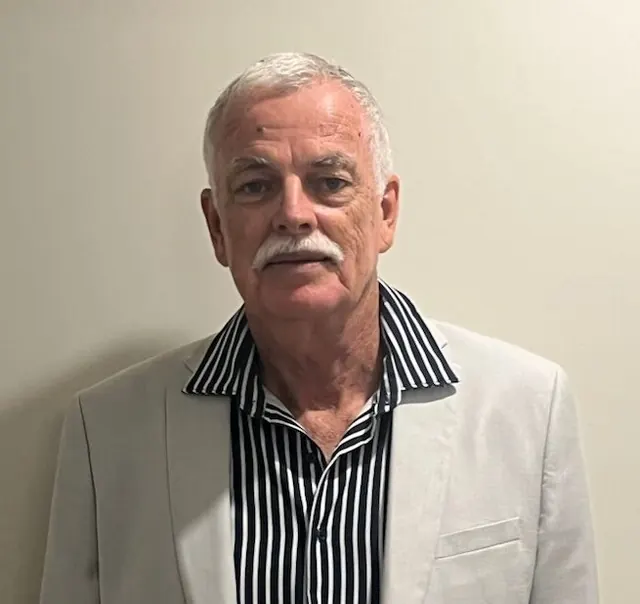
Peter Hogg
Co-founder
Peter has spent 40 years bringing technology into rail infrastructure, first as an employee and then as a consultant to some of the largest resource companies in the world.
One example is the end-of-train (EOT) project on BHP's Pilbara iron ore railway, which pioneered the technology in Australia in the 1980s. Brake-related derailments were still a problem on its long trains, and the research department needed data to act. The solution, a recorder built on a microprocessor and solid-state memory, gave it to them, and the driver training that followed cut train separations sharply.
Selected projects
- The first on-track remote automatic downloads from a GE locomotive, at BHP Billiton Iron Ore
- Reliable weighbridge operation at track speed, after seven earlier attempts had not achieved it
- The first private digital microwave system on a Pilbara railway: 10 hops along 426 km
- A VHF radio telemetry system that was a world first at the time
- A common signalling control platform across ARTC's three network control centres
More projects
- Loadout tunnel communications: voice and distributed power data working inside BHP's new steel (Armco) tunnels
- Solar and hybrid powered digital microwave and radio, later commercialised: diesel running time cut from 16 hours a night to 1 hour
- Battery life extended from 12 months to more than 8 years at BHP Iron Ore
- ARTC's new Network Control Centre West in Adelaide
- Design, installation and commissioning of the VHF radio system and control room for BHP Billiton Iron Ore's Car Dumper 5
- BHP Billiton Iron Ore's Ore Body 18 rail expansion: a 30 km spur microwave link, VHF voice and signals telemetry, and loadout communications
- Telecommunications for Aurizon's new Rockhampton control centre
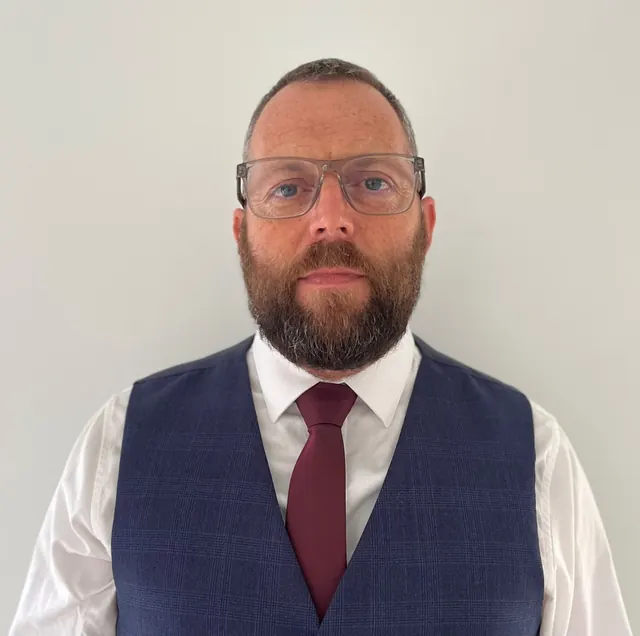
Glenn Vivian
Co-founder, Construction Director
Glenn has 20 years in railway construction and project management, in several countries. His work spans signalling and communications, track construction, and rolling stock procurement and fit-out.
That includes the world's first heavy-haul driverless trains, at Rio Tinto in Western Australia, and major projects in India, Malaysia (Metro Rail), the UK (High Speed Rail, Channel Tunnel) and Australia.
Selected projects
- AutoHaul™, Rio Tinto's automated driverless trains
- ECP braking system on the ECP-fitted operational fleet (Rio Tinto, WA)
- Fitting the AutoHaul equipment to the GE Dash 9 and EVO locomotive fleet, managing Rio Tinto's 8 Mile yard and workshops
- Rio Tinto's Rail Capacity Enhancement project, taking the network to 283 Mt, then 333 Mt, then 353 Mt
- Construction delivery of rail duplication and re-signalling projects for QR, ARTC and RailCorp on Australia's east coast
Where it came from
Rail was falling behind.
The idea goes back to 2013. Peter and Glenn could see rail falling behind aviation, automotive, mining and shipping in its use of sensors, connected equipment, cloud computing and real-time data.
As long-term problem-solvers in rail, they could also see how much a railway stood to gain from them. Transend is what they built: one system that reads the whole train, for the whole journey.
The aimA step-change in the safety, performance and reputation of the freight rail industry.
What Transend had to do
The brief they set themselves.
- Warn earlier than the systems it replaces.
- Keep every reading in one accurate record, not in separate systems that do not talk to each other.
- Help people make fast, well-informed decisions when something goes wrong.
- Be easy to fit, and pay for itself.
- Be ready for what comes next, including automatic train operation.
See Transend on your own network.
Half an hour with the team: the sensors, the dashboard, and what a trial on your wagons would involve.