Transend® by Transdiagnostics

No more blind kilometres.

Transend rides on every wagon and reports its bearings, wheels, brakes and handbrake every ten seconds, to the cab, the operations centre and the workshop.

Transend rides on every wagon and reports its bearings, wheels, brakes and handbrake all journey.

The gap

A wayside detector sees your train once every 30 km.

In between, nobody is watching. A failing bearing can go from normal to critical in minutes. At East Palestine, three hot box detectors read Norfolk Southern train 32N. The bearing failed anyway.

about 30 km unseenabout 30 km unseen
Wayside detector: a few metres of track, read once as the train goes by

Always on

Transend reads every bearing, on every wagon, every ten seconds.

A unit at each bearing reports its temperature all journey, in any weather. A 100-wagon train is checked in ten seconds, not two and a half hours.

One system

Every sensor the train needs, in one connected kit.

Bearing and wheel temperature, vibration, brake performance, handbrake and impact alarms, in-train forces and the GPS position of every wagon. Each wagon passes its readings along the train over a low-power IoT network to the locomotive, which sends them on by 4G or satellite.

Caught in time

The climb, as it happens.

A bearing's temperature can double between two detectors. Transend sees the first degrees of the rise and raises the alarm on the way up.

Instant alerts

The right people know in seconds.

The driver, the operations centre and maintenance are alerted together, with the wagon, the axle and what to do next.

  • Driver displayWagon 37, axle 3 left, bearing critical. Stop at the next loop.
  • Operations centreCritical bearing alarm on wagon 37. Path cleared to the loop.
  • MaintenanceWagon 37 set out for a bearing change at the next yard.
  • Example alarm

Connected railroad

From one bearing to the whole network.

Every wagon of every train, live on one screen.
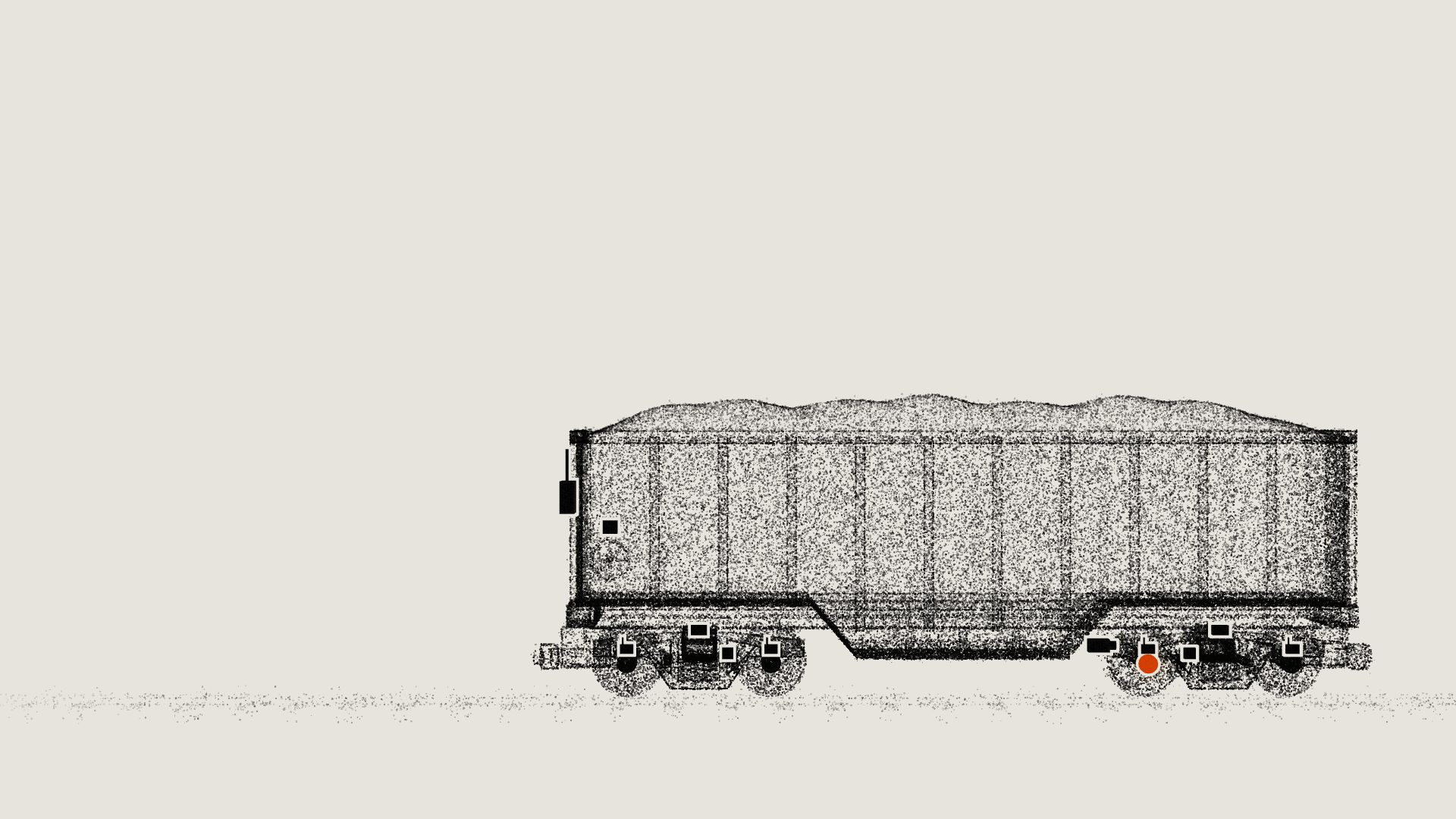
The unit shown is a stand-in. A picture of the Transend unit itself is coming.

The Transend unit

What rides on the wagon.

A sealed unit sits above each bearing. It reads the wagon, passes its readings along the train, and is fitted in the workshop with nothing to wire between units.

In the trial kit now

  • Bearing temperatureA hot bearing is seen on the way up, with how fast it is rising.
  • Wheel temperatureHot wheels from a dragging brake, and cold wheels from a brake that is not working.
  • Vibration and impactsRough riding, wheel impacts and poor track.
  • HandbrakeAn alarm if a handbrake is on while the train is moving.
  • PositionGPS on every wagon, and an alarm if a wagon is left behind.
  • Supply voltageA unit that is not charging is found from its graph, not from a breakdown.

Coming next

  • Acoustic detectionBearing wear heard before it shows as heat.
  • Brake performanceHow each wagon's brakes are working.
  • In-train forcesThe forces between wagons along the train.

Which is which: to confirm with Peter

The dashboard

See the whole network. Zoom to a single bearing.

The Transend dashboard shows every train on one map. The screen stays grey until something is wrong: amber for a warning, red for a critical alarm. One click takes the ops centre operator to the wagon, with every bearing and its live temperature.

See how it works

  • The network, live. Every train on the map, and the open alarms beside it.
  • Straight to the wagon. The bearing with the fault, how hot it is, how fast it is rising and what it read when the alarm opened.
  • The line diagram. Every service at a glance, then down to the wagon, the bogie and the wheel.

The driver gets the same alarm, in plain words.

The cab screen stays quiet until something is wrong. Then it says which wagon, how hot, and what to do now.

Proven in service

Four years on the Mary Valley Rattler. Here is what it caught.

Real events from the Rattler, out of Gympie.

  • Handbrake on, train moving

    A switch on every carriage's handbrake. Applied while parked at Gympie station is a status. Applied with the train under way is an alarm, before the wheels flat and the blocks overheat.

    Handbrake on · train moving
  • Points, read before the driver can see them

    A monitor on each set of hand-operated points tells the approaching train which way they lie, with its signal strength and battery voltage. No more waiting until they come into view.

    Points 21 · Normal
  • Lost rail car

    Carriage 507 went into the workshop for overhaul. When the train left the yard without it, Transend raised a lost rail car alarm.

    Lost rail car · 507 · not heard since the yard
  • A flat battery, traced to a connector

    The supply voltage charged on departure from the yard and was flat on the return. Maintenance traced it to a faulty connector on the train, found from the graph and not from a breakdown.

    Supply 12.0 V · not charging
  • Trip review with under-car video

    Click a point on the trip graph and the under-car video jumps to that spot on the track. When an alarm is raised, a photo of the underframe is requested and shown to the driver. The accelerometers show track quality, so crews can find the sections that need repair.

    Speed · accelerometers · video · alarm photo
  • An AI report from real bearing data

    A section of real temperature data from one trip went to AI for analysis: both bearings of the wheel set settling to a healthy level, and a baseline with alert thresholds to carry forward.

    Wheel set gap narrowing · settling

Read about the proof of concept

The system

Above rail. Below rail. Connected.

Others do parts of this. Transend brings it together, powers it and connects it, wherever the train is.

Above rail

On the locomotive and every wagon.

  • Wheel and bearing temperature
  • Brake performance
  • Handbrake alarm
  • Impact alarms
  • Handling and vibration
  • In-train forces
  • GPS position of every wagon
  • Lost rail car and end of train

Below rail

Track and points, read by the passing train. No detector sites to build.

  • Points position, powered and hand-operated
  • Flood level on the track ahead

Power and comms

Low power by design, so it runs where there is no supply.

  • Smart power management in every unit
  • A low-power IoT network along the train, wagon to wagon to the locomotive
  • 4G or satellite from the locomotive
  • Driver and operations centre displays
  • A secure cloud platform for workshop and maintenance data

Fast to fit

In the workshop, not on the track.

  1. 01

    Fit

    Units are fitted to existing rolling stock in the workshop. No track closures, and no wayside equipment to build or maintain.

  2. 02

    Connect

    Every wagon reports over every kilometre of your network, new routes included, through floods and heat.

  3. 03

    Act

    Alerts go to the driver, the operations centre and maintenance. Condition-based maintenance from day one.

Interactive reenactments

Real incidents, replayed. With Transend switched on.

Play a real rail incident from the public record, step by step: the readings the crew had, and the alarms Transend would have raised along the way.

Explore the reenactments

“The freight rail industry has long relied on reactive safety measures, which are no longer sufficient for today's operations. Transend brings real-time intelligence to train control and maintenance teams, allowing operators to prevent failures before they occur, reducing downtime and improving safety.”

Peter Hogg, Co-founder of Transdiagnostics

See Transend on your own network.

Half an hour with the team: the sensors, the dashboard, and what a trial on your wagons would involve.